We rebuilt Wawibox’s dental marketplace in flight and stayed for 7+ years
7+ yrs
of ongoing partnership
80%
faster application load time after the rewrite
15 weeks
from start to live marketplace MVP
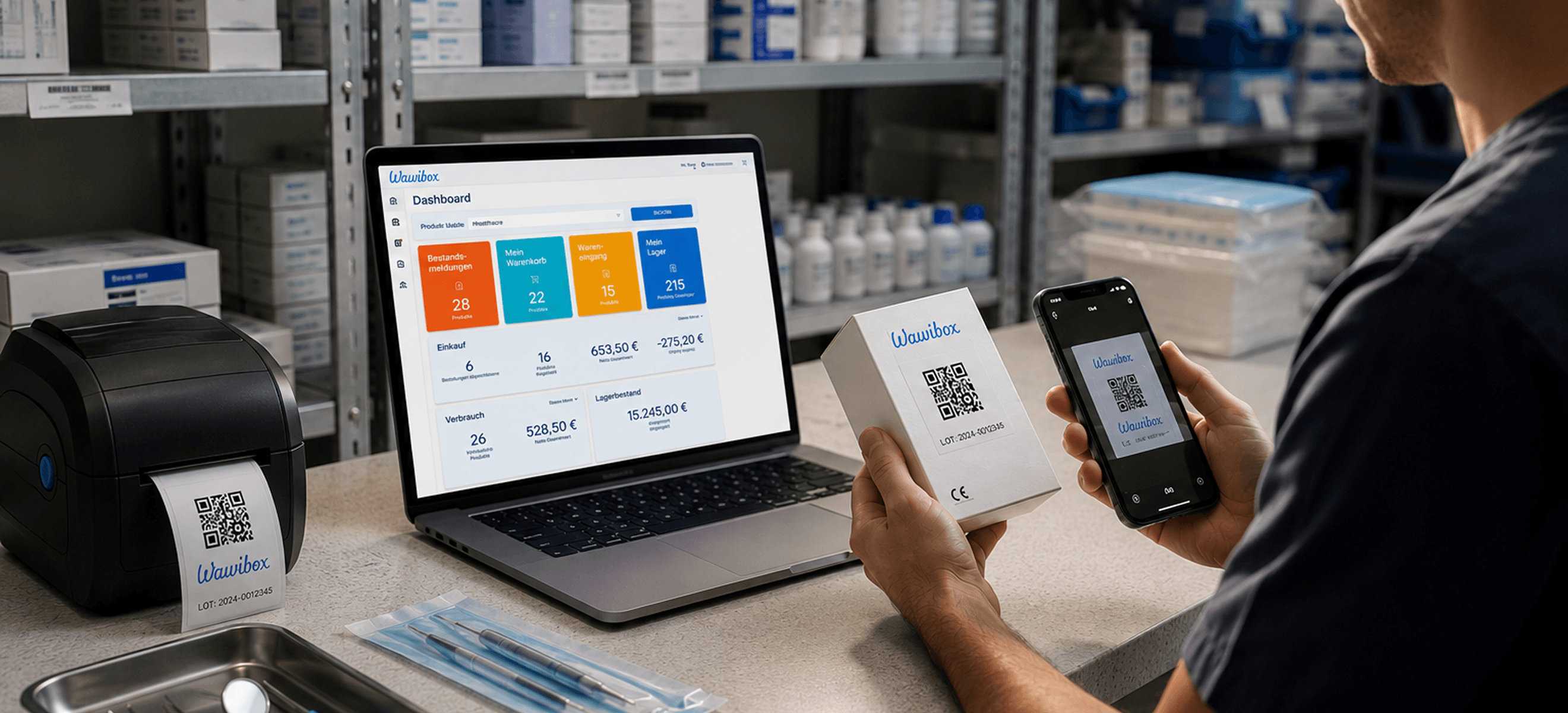
Wawibox is a German platform that digitizes how dental practices buy and manage supplies. Its core product is Wawibox Pro, a procurement and inventory system. It’s where practices print labels, scan them to track stock, get automatic consumption analytics, and reorder the moment supplies run low. Around it is a marketplace where clinics can compare more than 1.4 million prices across 200,000+ dental items.
Industry
- HealthTech
- E-commerce
Provided services
- Frontend development
- Platform rebuild
- Team augmentation
About Wawibox
A dentist, a developer, and a procurement platform that outgrew its startup
Wawibox started in 2012, when a practicing dentist and a software engineer founded Caprimed GmbH in Heidelberg to solve a problem every dental practice faces, and few enjoy managing: ordering and tracking supplies. The product launched in 2014, and the company became the first in the dental industry to raise capital through crowdfunding.
The idea worked. By 2020, Wawibox was no longer a standalone startup: it had joined the Prospitalia Group (now Vivecti Group), one of Germany’s leading healthcare procurement groups. The group brokers purchasing volume worth billions of euros across its companies, and Wawibox became its dental arm while keeping its own brand, independence, and product team.
Challenge
Wawibox requested engineers, but 3 years later, it needed a new platform
In 2018, Wawibox faced a hiring challenge: it sought to fill self-organized frontend engineering roles for its dental supply marketplace, but couldn’t hire quickly enough. Our developers stepped in, and 15 weeks later, the marketplace MVP was live and already gaining its first user traction.
For the next two years, it looked like a finished story: the product worked, we maintained it, and users kept ordering. Then the platform could no longer keep up with the new requirements.
By 2021, Wawibox needed a second product, an inventory management system, built from scratch. At the same time, the original marketplace was starting to show its age: load times had slowed, the legacy frontend had become expensive to maintain, and search engines struggled to crawl a client-rendered catalog of more than 200,000 products and 1.4M+ prices.
For a platform that wins customers through price comparison, weak SEO is a revenue problem. If a clinic googles a dental product and Wawibox doesn’t rank, the comparison never happens.
None of this could be in a vacuum. Dental practices reorder supplies constantly, and every hour of downtime is an hour when clinics order from a competitor’s catalog instead.
Solution
Start from a blank page, finish with a rewrite
We didn’t try to fix everything at once. The work was split into two tracks with different clocks.
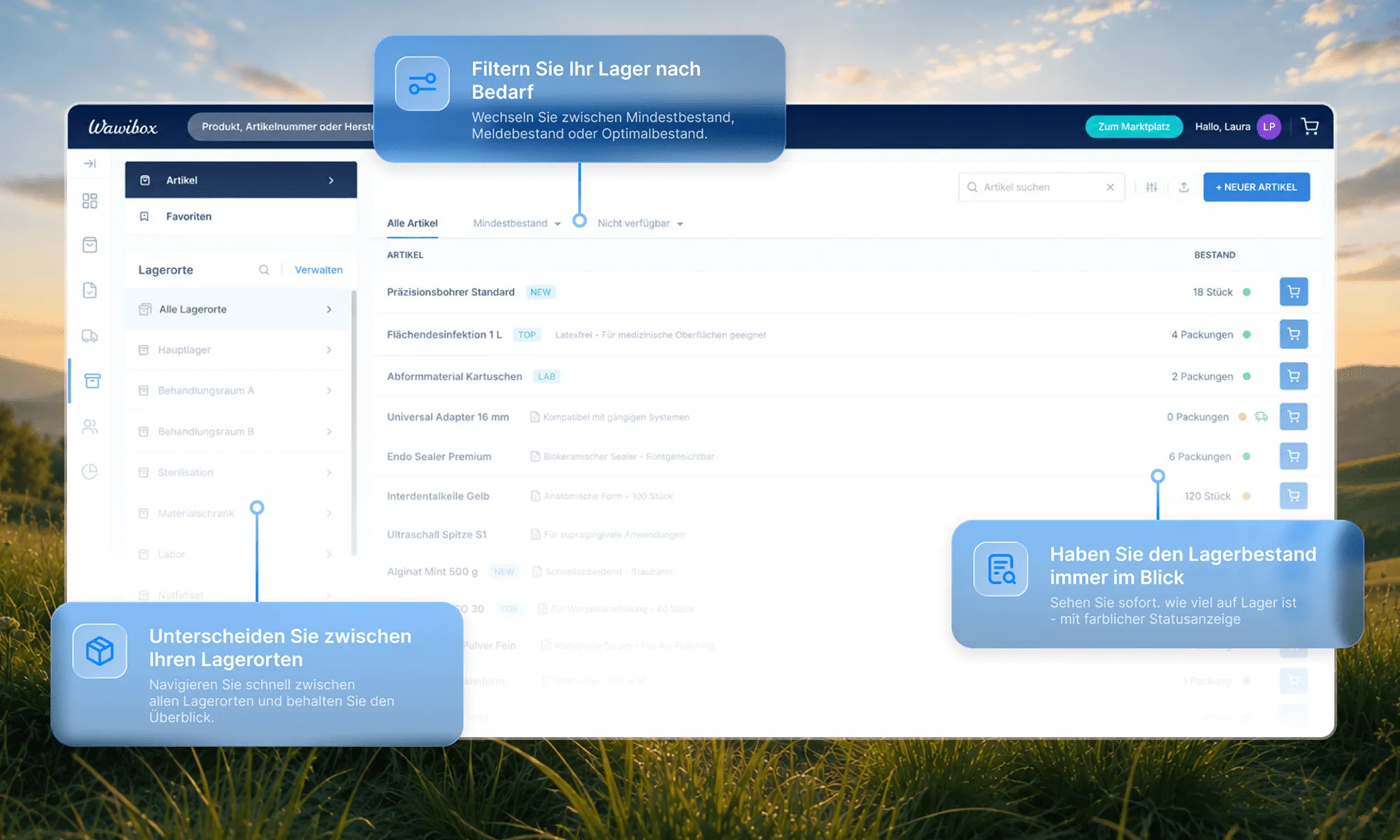
The fast track was Wawibox Pro. In 2021, we expanded the team to a product architect and 2 frontend developers and started building the stock management application on Vue.js 3. This was a blank page. 6 months later, the first MVP was live. Since then, practices have been able to track inventory, manage storage, and receive notifications when supplies reach reorder points.
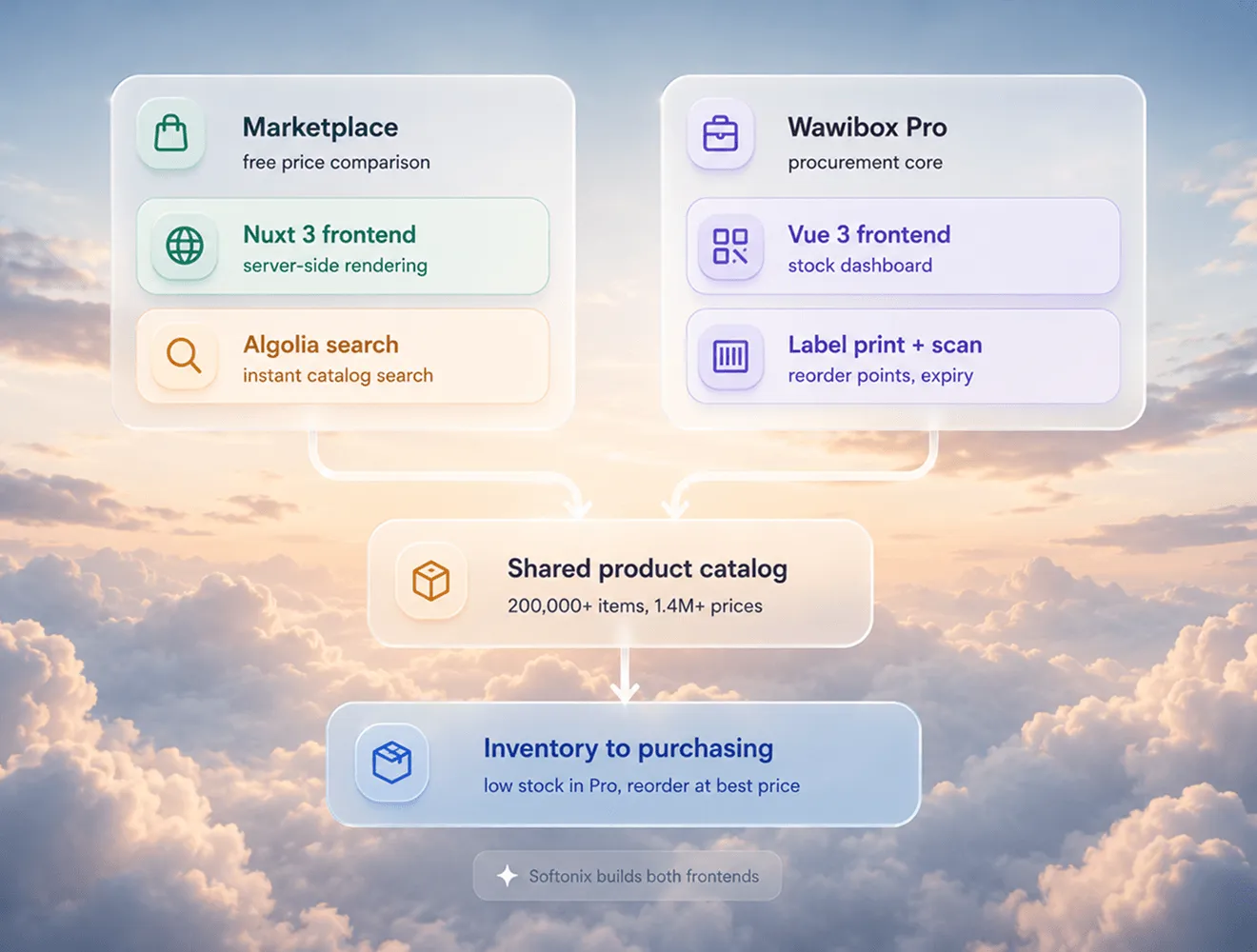
The slow track was the marketplace itself. In 2022, we began rewriting it from the ground up with Nuxt 3, Vue.js, Node.js, server-side rendering, and Algolia as the search engine. The priorities came from the business:
- SSR came first because it made every one of the 200,000+ product pages visible to search engines.
- Algolia came next because clinics comparing prices will not wait for a slow search.
- Performance remained a priority throughout, which led to an 80% drop in load time.
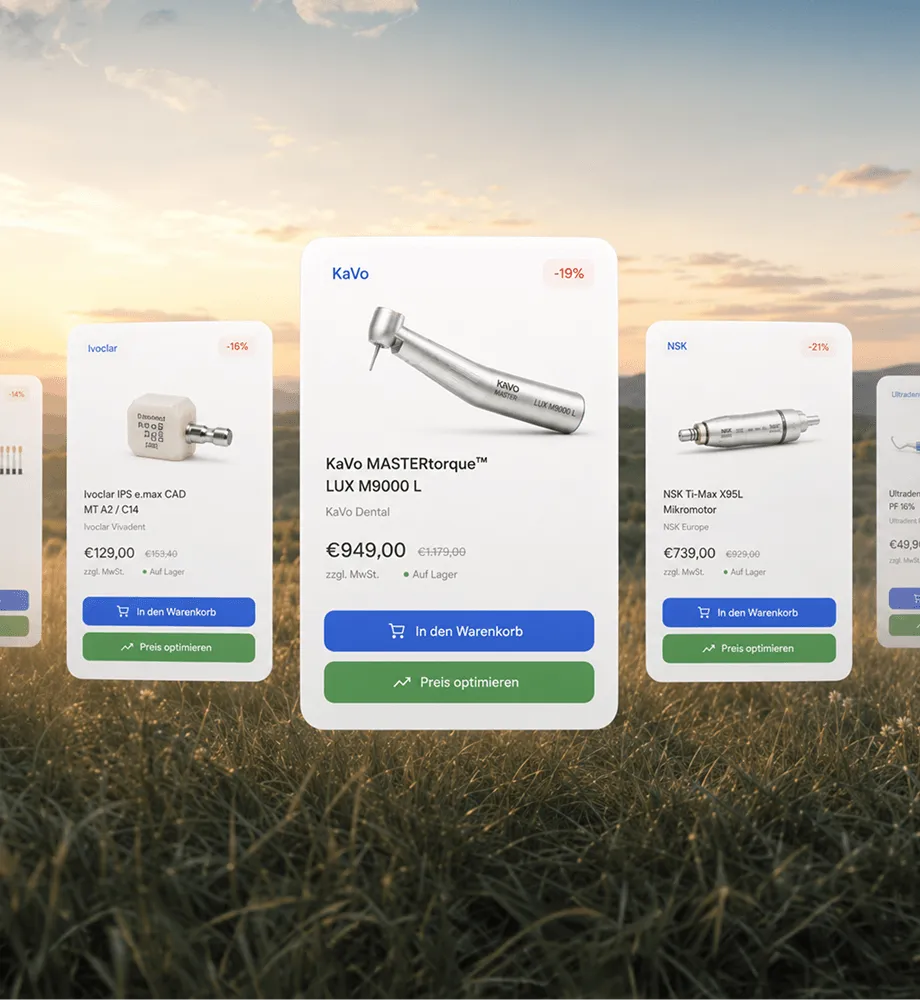
We also rebuilt the features that kept clinics open. This included the price comparison engine, which surfaces the best offer for each item, and the smart cart optimizer, which combines deals, free shipping, and discounts on every order.
Features
Three answers to one question: where does the money leak
Clinics use Wawibox to solve a purchasing problem: the same supplies can cost very different amounts depending on the vendor, and someone at the practice has to figure out where to buy and what’s running low. Every feature we built addresses a version of that:
This is the main product, and the reason practices stay. Pro runs full materials management: print a label for each item, scan it to log what’s used, and the system tracks what’s in stock, where it’s stored, and when it hits the reorder point. It carries batch numbers and expiry dates through the workflow, shows which identical product to use first based on shelf life, and turns it all into purchasing, stock, and consumption analytics. A practice sees its material spent instead of guessing at it.
The free marketplace shows supplier offers side by side, pulled from 1.4M+ prices across a 200,000+ item catalog. One search replaces a morning of checking vendor sites, and it’s what brings most practices into the ecosystem before they ever reach Pro.
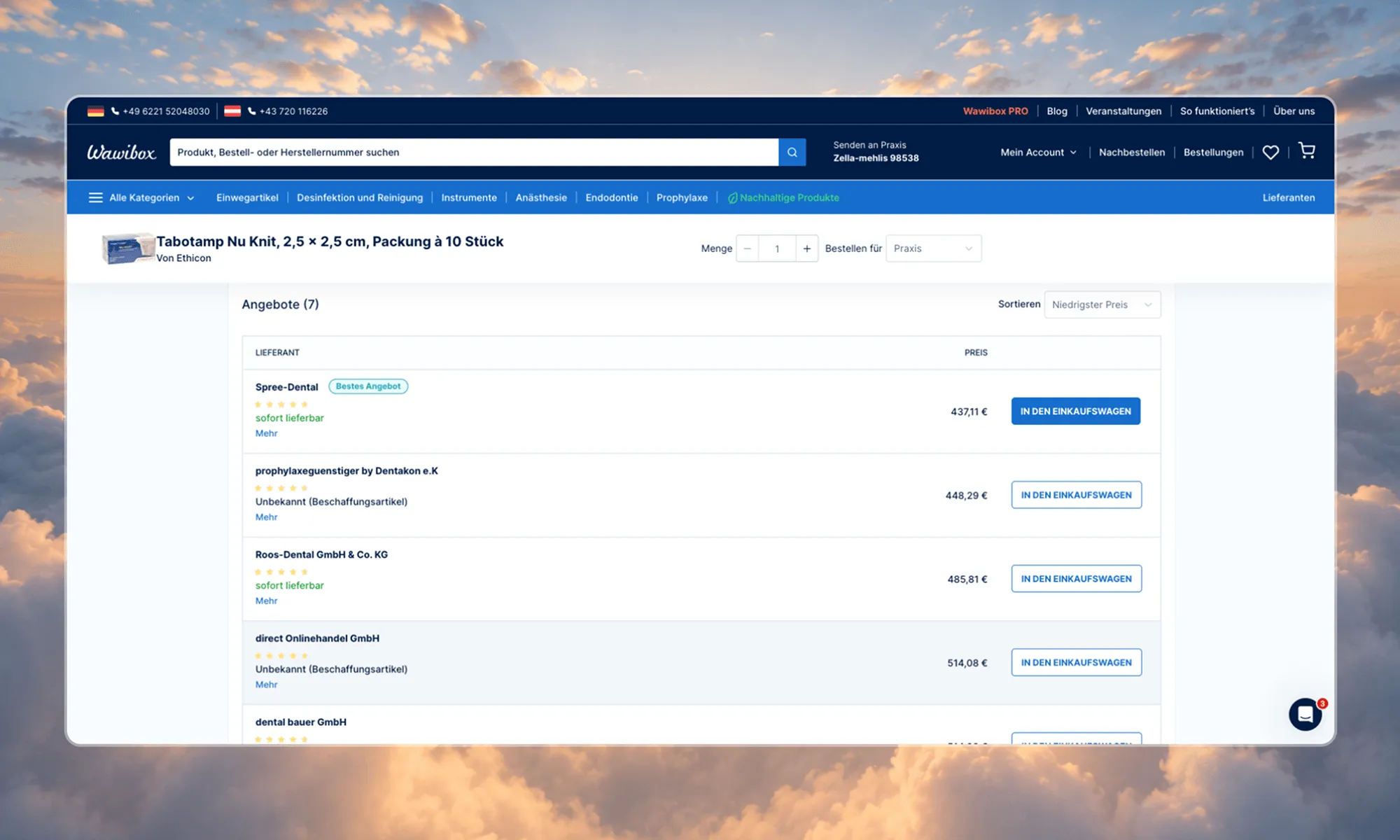
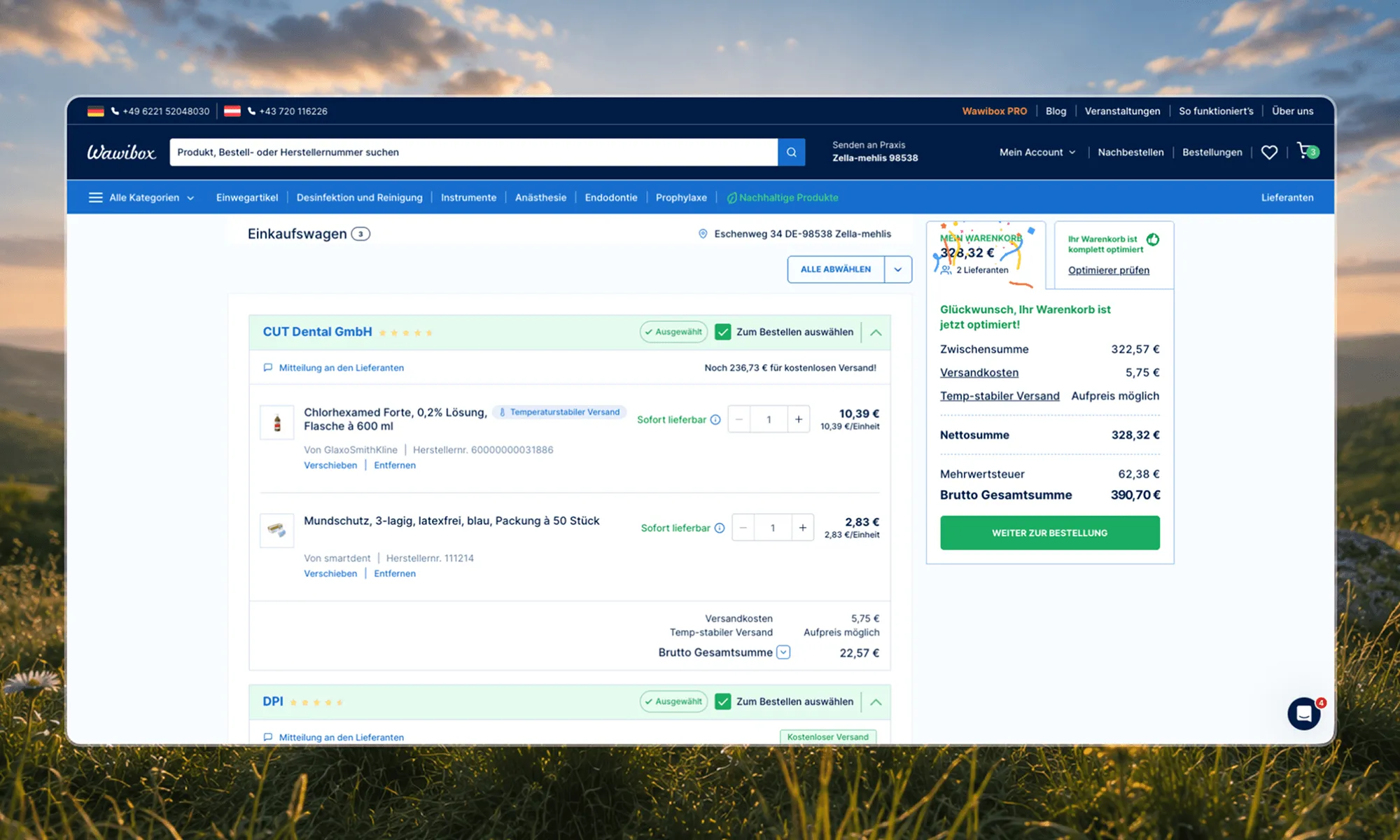
Comparing a single item takes little effort. A full order takes much more, because the lowest price for one product stops being the lowest once shipping costs and discounts change the total. The optimizer recalculates the entire cart, combining deals, free shipping thresholds, and discounts to save on the full order.
Marketplace and Pro are cross-linked: inventory data flows straight into purchasing, so the moment Pro flags a low stock level, reordering at the best available price is one step away.
Partnership
Why a staffing request never went back to being one
Wawibox could have treated us the way the engagement started: as borrowed hands. It went the other way. Our developers became part of Wawibox’s day-to-day work, using the same Slack & Jira, and joining the same Google Meet standups. When priorities shift on the client’s side, our team shifts with them, without a middle renegotiation.
That’s also why nobody writes detailed specs for us anymore. After years of working on the product, the team knows it well enough to challenge weak solutions, propose better ones, and catch problems before they reach users.
"The team is business savvy. Moreover, Softonix provides their own ideas and thinks for themselves.They deliver high-quality work and do the heavy lifting. They’re awesome."

Andreas Zimmerer
Head of Engineering at Wawibox
Result
A platform that loads faster, ranks higher, and is ready to leave Germany
Rewriting large products takes time, but it creates long-term advantages. For Wawibox, the primary goals of the modernization effort were improving performance and SEO visibility.
By rebuilding the marketplace on Nuxt.js and modernizing the broader platform ecosystem, we helped create a faster user experience, improve search engine crawlability, and support continued growth in organic traffic.
What started as work on a single marketplace product evolved into a multi-year engineering partnership spanning both the marketplace and inventory management platform. Today, our team continues supporting the evolution of both products as Wawibox expands its presence across European markets.
Evolution
The release cycle that never stopped
Most case studies end where this section begins: the product ships, the metrics land, and everyone moves on. This partnership followed a different path.
Both products still run on the foundation laid in 2022, but neither stands still. Wawibox releases new features and improvements every month. The cadence is steady enough for the company to run recurring product update sessions, where the team walks dental practices through what changed in the marketplace and Wawibox Pro over the previous month.
This kind of release rhythm doesn’t sustain itself by accident. It’s one of the quieter payoffs of the Nuxt 3 rewrite. The 80% faster load time made headlines within the company, but the 30% drop in maintenance effort made the monthly cadence possible. Spending less time keeping old code alive means more time building what users ask for.
Our engineers own the release cycle. The team is fully integrated into Wawibox’s workflow: same scrum, daily standups, and full ownership of the frontend across all Wawibox products. That ownership includes what usually stays in-house: managing release cycles, monitoring in production, and taking responsibility for live incidents.
7 years in, the work has changed shape, from building screens to evolving a living platform, but it has never paused. The marketplace and Wawibox Pro that clinics use today are months newer than the versions they opened at the start of the year, and that is exactly the point.

Softonix engineers with Wawibox inhouse team at meetup in Heidelberg. Jan 2026

Got a product idea that needs the right team?Let's build it.
Get a free consultationLet’s talk
If you are building something meaningful and need a team you can rely on, we are ready to step in. Tell us what you are working on or book a call when it suits you.