Vibe coding rescue services for apps that broke after launch
Your customers are seeing errors, and every new prompt seems to create another problem. Our vibe coding fix services keep your app running while we repair it. We fix the issues affecting users first, then address the underlying causes.
Send us what’s brokenSigns your app needs a rescue
Founders contact us after spending a week trying to prompt their way out of the problem. By then, they’re usually dealing with one or more of these issues.
Every fix breaks something else
You ask the AI to fix checkout, and sign-up stops working. It changes one part of the app without understanding the full system, so every fix risks creating another problem.
Customers see data that isn’t theirs
A customer reports seeing someone else’s order or profile. Access controls were never added, or they protect one table while leaving others exposed.
Payments succeed, but records don’t update
Stripe processes the payment, but the subscription never starts, or the order doesn’t appear. The webhook fails, and no one receives an alert.
No one can explain how the app works
The original developer has moved on, or AI generated most of the code. Every change becomes guesswork, which is expensive on a live product.
Where vibe-coded apps fail once real users arrive
| What you notice | What’s usually behind it |
|---|---|
| Random crashes after a release | No tests, so nothing catches a broken flow before customers do |
| Pages slow down as users grow | Queries that load whole tables, written when there were ten rows |
| Users reach other users’ data | Missing or partial access rules in the database |
| Charges without matching orders | Webhook handlers with no retries, logging, or alerts |
| Bills from an API spike overnight | Keys exposed in frontend code or loops calling paid services |
How our vibe coding cleanup services run after the first call
Fixing a live product requires two tracks at once: keeping it running for customers today and removing the causes of recurring failures. Here’s how we handle both.
Step 1. Stabilize
Days 1–3
We get access, review the logs, and fix the problems affecting customers right now, whether it’s a broken payment flow, an exposed table, or a login crash. We add monitoring on day one, so new errors reach us before they reach your support inbox.
Customers can use the app again, and new failures trigger an immediate alert.
Step 2. Review the code
Days 3–7
Once the app is stable, our engineers review the codebase screen by screen and query by query. Think of it as an AI code review service backed by engineers who are accountable for every finding. Each issue comes with a severity level, root cause, and repair estimate.
You receive a written report explaining what to keep, repair, or replace, along with a fixed price for the work.
Step 3. Clean up and protect
Weeks 2–3
We merge duplicate logic, lock down data access, and add tests for the flows customers pay for. Every change must pass review before it reaches production.
By the end, your team can release updates on a busy day without relying on luck.
Step 4. Support or handover
Ongoing
Some teams keep us involved to run the app and build new features. Others take it back with complete documentation and a walkthrough of every change.
Both options remain open, with no lock-in.

We stabilize the app within days and complete recovery in up to 3 weeks, with weekly deliveries. If we miss an agreed milestone, you don’t pay.
Contact usRescue or rebuild: how we decide
Agencies that sell full rewrites recommend starting over. We’d rather tell you what your app needs. In most cases, we can rescue it.
We recommend rebuilding when
Rarely- Fixing one part requires changes across most of the system.
- The data model no longer reflects how the product works.
- The code depends on abandoned libraries or packages that never existed.
- A rescue would cost almost as much as a clean rebuild while leaving major risks in place.
We can rescue the app when
Usually- The core workflows work for most users, most of the time.
- We can repair the data model without migrating every record.
- The main problems are limited to a few areas, such as access, payments, or deployment.
- The app uses mainstream technologies that your team can support and hire for later.
Client Stories
Redesigned and rebuilt an enterprise HR platform from a slow legacy app into a fast, modern product we fully own and deliver
10K+
active daily users across Canada
100+
screens redesigned and rebuilt
5 years
of partnership and counting
 View details
A founder came to us with an enterprise product that had hit a wall. The UI was outdated, and the app had become painfully slow across 100+ screens.
We started in 2021 with one goal: make the product fast again and refresh the interface. As we rebuilt the UI and fixed performance issues, the app became stable and responsive.
Over time, the client trusted us with more, and the work grew into full product ownership — covering frontend, backend, mobile, architecture, and delivery.
Read client storyTestimonials
More Than a Vendor
We work as an extension of your team, combining technical expertise, ownership, and clear communication to deliver real business results.
"The most impressive aspect of Softonix is their willingness to take on new challenges and work."

Daniel Locksley
VP Product & Technology
"Rather than coding for its own sake, their team is passionate and takes great pride in what they build."

Daniel Wiener
Co-Founder and CEO
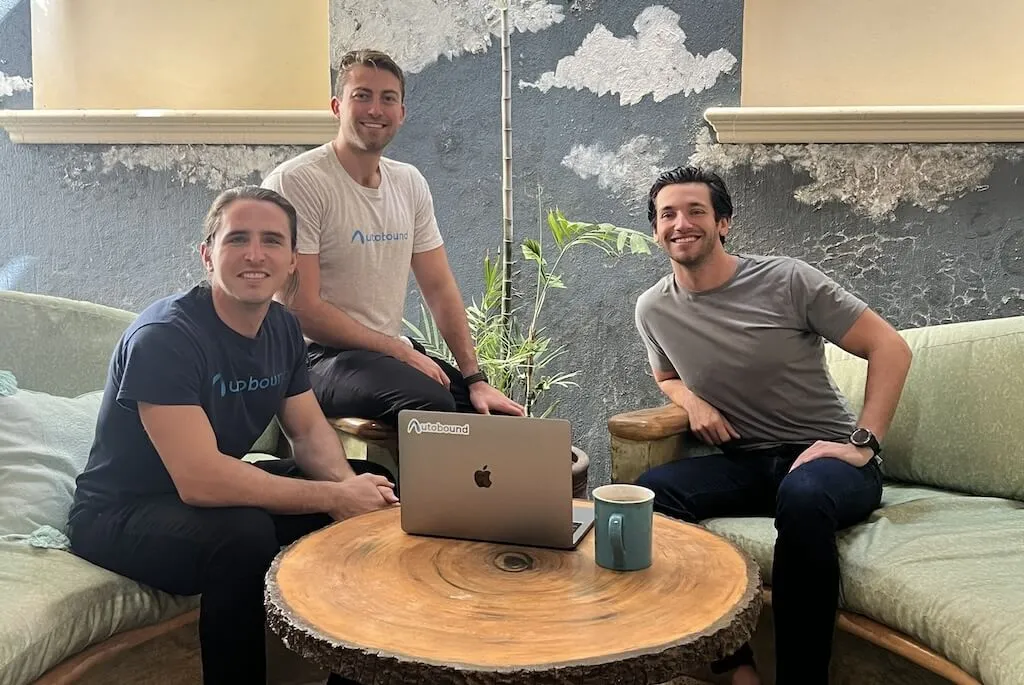

"They care for your product as much as you do."
Andreas Zimmerer
Head of Engineering
"Their engineers are world class and communication from the team is fantastic. I couldn't have asked for a better team."

John Figueiredo
CEO
"These guys are incredibly easy to work with."

Chris McShane
CEO
"Pleasure to work with. They have great skills and are prompt. Absolutely planning to work with Softonix on future projects."

Jarrett Kuljis
Co-founder & Technical Director
"Exceptional team with very high quality and commitment. They are fast, efficient, and hardworking."

Sreejith Partha
CEO

"It's rare to find a team that combines strong technical execution with genuine commitment."
Jeff Chan
CEO
"The most impressive aspect of Softonix is their willingness to take on new challenges and work."
Daniel Locksley
VP Product & Technology
"Rather than coding for its own sake, their team is passionate and takes great pride in what they build."
Daniel Wiener
Co-Founder and CEO
"They care for your product as much as you do."
Andreas Zimmerer
Head of Engineering
"Their engineers are world class and communication from the team is fantastic. I couldn't have asked for a better team."
John Figueiredo
CEO
"These guys are incredibly easy to work with."
Chris McShane
CEO
"Pleasure to work with. They have great skills and are prompt. Absolutely planning to work with Softonix on future projects."
Jarrett Kuljis
Co-founder & Technical Director
"Exceptional team with very high quality and commitment. They are fast, efficient, and hardworking."
Sreejith Partha
CEO
"It's rare to find a team that combines strong technical execution with genuine commitment."
Jeff Chan
CEO
Know which tool built it?
Each builder creates a different set of problems. Choose the platform your app was built with to see what we fix first.
- LovableLock down Supabase tables before paying users arrive.
- BoltMove a browser-built app into your own repo and database.
- Base44Own the backend instead of renting it from the platform.
- CodexReview and test code nobody has checked yet.
- Claude CodeGive a fast-growing codebase structure and tests.
- ReplitAgent sessions running against live customer data.
Not broken, just outgrowing the prototype?
If nothing’s on fire but the prototype needs real infrastructure, that’s AI Prototype to Production, not a rescue.
Let’s talk
If you are building something meaningful and need a team you can rely on, we are ready to step in. Tell us what you are working on or book a call when it suits you.
Vibe code rescue FAQ
We can usually start within 1-2 business days after the first call. We’ll request access to the repository, hosting environment, and database logs. The first patches often go live before we complete the full review.
No, but we may ask you to slow down during the first few days. Once monitoring and code review are in place, your team can release new features alongside our fixes without creating conflicts.
Yes. Whether the app was built with Lovable, Replit, Bolt, Cursor, Claude Code, or several tools, the same types of failures tend to appear. We inspect the code itself instead of relying on the builder.
The cost depends on the codebase size and the number of systems involved. After a free call, you’ll receive a fixed quote before any paid work begins.
Yes. That’s the usual outcome. We add safeguards so AI-generated changes must pass automated tests and human review before release. Your team keeps the speed of AI tools without pushing untested changes to customers.
A vibe coding consultant can diagnose and fix a contained issue, such as an exposed table or a failing webhook.
An unstable live app also needs ongoing coverage. Someone must monitor alerts, review releases, and handle rollbacks when something goes wrong. One person can’t reliably cover all of that for long, so we assign a small team and give you one lead contact.
We may need access to production systems and logs to diagnose failures, but we avoid working with live customer data whenever possible. We use copies of the data, limit access to what the task requires, and remove that access when the engagement ends.