Ship your Lovable app to production and keep every screen you built
Open your Lovable app to paying customers with confidence. We secure the Supabase data and move everything to hosting in your name; you keep designing new screens in Lovable.
Get a free Lovable app audit- Lovable
What we usually find when opening a Lovable app
Lovable gets the screens and flows right. The gaps sit underneath, in places you don’t see from the preview. These are the ones we check first in every Lovable app-to-production project.
- supabase.rls
Open Supabase tables
Row Level Security is off or half-set, so anyone with the public key from your app’s code can read or change user data.
- client-side
Logic that only lives in the browser
Price checks, limits, and permissions run in React on the client. A user who opens dev tools can skip them.
- schema
A schema that grew one prompt at a time
Tables duplicate each other, columns mean different things in different places, and every new feature makes the data harder to trust.
- hosting
Hosting and domain you don’t control
The app runs on Lovable’s preview URL or Lovable Cloud, so you can’t set up staging, backups, or your own monitoring.
Lovable security and the rest of the production checklist
| Category | In your Lovable app | What it costs you |
|---|---|---|
| Database access | RLS off or incomplete on Supabase tables | A user can read other users’ records with the public key |
| Business rules | Checks run in the browser | Anyone can skip a paywall or a limit |
| Environments | One project, edits go live | A prompt that fixes one screen breaks another for real users |
| Hosting | Lovable preview or Lovable Cloud | No control over backups, uptime, or costs |
| Code | Synced to GitHub, never reviewed | Nobody can say what will break next |
How to take a Lovable app to production with us
Lovable stays open in your browser the whole time. While you test ideas there, production gets built beside it, and every stage below hands you something to click through on your own app.
Step 1. Security audit and review
1–3 days
Our engineers open the GitHub repo Lovable synced for you and walk through Supabase table by table, checking which policies are missing and where the frontend talks to the database directly.
You get: a written list of risks sorted from “fix this week” to “fix before scale,” plus a fixed price for the work.
Step 2. Secure
1–3 weeks
Row-level security goes on every table, with a policy per role tested by querying as each type of user. Checks that decide money or permissions move from React into database functions, and API keys leave the frontend.
You get: an app ready for paying customers, delivered in weekly increments.
Step 3. Harden
1–3 weeks
Staging gets its own Supabase project, so tests and new prompts never touch real data. Tests cover sign-up, payments, and other flows your users rely on, and every change from Lovable passes through a pull request and a test run.
You get: error alerts that reach you before a customer does, and releases you can ship any day of the week.
Step 4. Launch
end of project, then ongoing
The app moves to hosting in your account, your domain points to it, and traffic switches over at a quiet hour with a rollback ready. Users log in with the same accounts as before.
You get: the app and its data in accounts you own. Next, we keep building with you or hand over to your team with docs, with no lock-in either way.

From Lovable prototype to production, with a fixed price after step 1.
Get a free Lovable app auditWhat stays from your Lovable project, and what changes
When founders ask us to take their Lovable prototype to production, most expect to hear “we’ll need to rewrite it.” For a typical Lovable app, that’s not true.
What stays
Untouched- Your React UI and every screen your users already know.
- The flows and logic you validated.
- Your Supabase data, moved safely.
- Your GitHub history.
What changes
Production layer- Access rules on every table.
- Business logic that must not run in the browser moves to the server.
- The data model gets cleaned where it blocks growth.
- The app moves to hosting and a domain in your name, with separate staging and production.
Client Stories
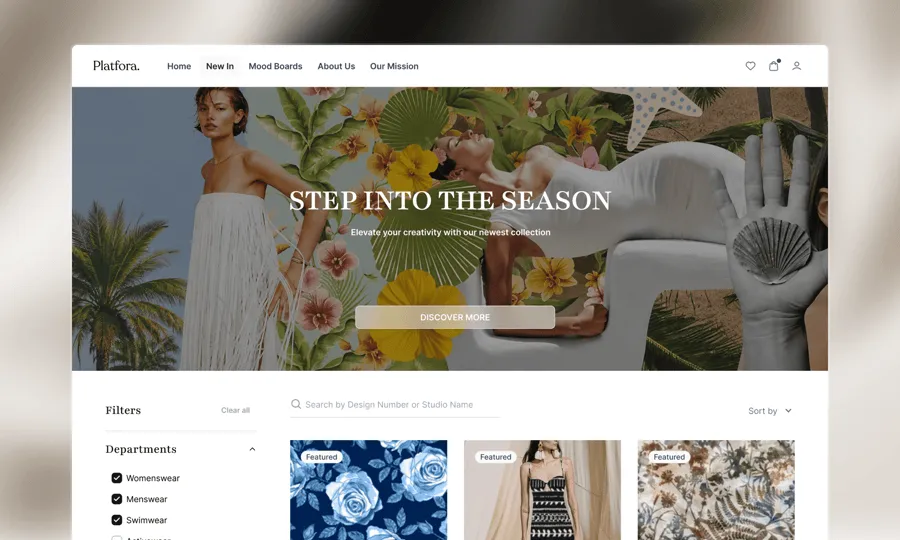
Turned a single agency’s private marketplace into a multi-tenant platform with subscriptions and its own revenue stream
1,000+
designs in the catalog
25+
studios onboarded
20K+
in design sales value
Testimonials
More Than a Vendor
We work as an extension of your team, combining technical expertise, ownership, and clear communication to deliver real business results.
"The most impressive aspect of Softonix is their willingness to take on new challenges and work."

Daniel Locksley
VP Product & Technology
"Rather than coding for its own sake, their team is passionate and takes great pride in what they build."

Daniel Wiener
Co-Founder and CEO


"They care for your product as much as you do."
Andreas Zimmerer
Head of Engineering
"Their engineers are world class and communication from the team is fantastic. I couldn't have asked for a better team."

John Figueiredo
CEO
"These guys are incredibly easy to work with."

Chris McShane
CEO
"Pleasure to work with. They have great skills and are prompt. Absolutely planning to work with Softonix on future projects."

Jarrett Kuljis
Co-founder & Technical Director
"Exceptional team with very high quality and commitment. They are fast, efficient, and hardworking."

Sreejith Partha
CEO

"It's rare to find a team that combines strong technical execution with genuine commitment."
Jeff Chan
CEO
"The most impressive aspect of Softonix is their willingness to take on new challenges and work."
Daniel Locksley
VP Product & Technology
"Rather than coding for its own sake, their team is passionate and takes great pride in what they build."
Daniel Wiener
Co-Founder and CEO
"They care for your product as much as you do."
Andreas Zimmerer
Head of Engineering
"Their engineers are world class and communication from the team is fantastic. I couldn't have asked for a better team."
John Figueiredo
CEO
"These guys are incredibly easy to work with."
Chris McShane
CEO
"Pleasure to work with. They have great skills and are prompt. Absolutely planning to work with Softonix on future projects."
Jarrett Kuljis
Co-founder & Technical Director
"Exceptional team with very high quality and commitment. They are fast, efficient, and hardworking."
Sreejith Partha
CEO
"It's rare to find a team that combines strong technical execution with genuine commitment."
Jeff Chan
CEO
Built with another tool?
Started your app outside Lovable, or switched halfway? The route to production looks the same, but the first fix depends on where the code came from. Pick your builder to see what we tackle first.
- ReplitSplit environments so agent edits stop hitting live data.
- BoltMove a browser-built app into your own repo and database.
- Base44Own the backend instead of renting it from the platform.
- CodexReview and test code nobody has checked yet.
- Claude CodeGive a fast-growing codebase structure and tests.
Vibe Code Rescue
Your app is already live, and something broke. We fix what is failing now, then plan the rest.
Let’s talk
If you are building something meaningful and need a team you can rely on, we are ready to step in. Tell us what you are working on or book a call when it suits you.


Lovable to production FAQs
Start in Supabase: turn on Row Level Security for every table and write a policy for each role, then test it by querying as a logged-out user. Move any check that decides money or permissions out of React and into a database function or an edge function. Connect the project to GitHub, deploy that repo to your own hosting, and point your domain at it. That covers the riskiest gaps. Tests, monitoring, and a separate staging database come next, and that’s usually where founders bring in a team.
Yes. We move the database and auth into a Supabase project or other database in your own account, migrate the data, and switch the app over without users having to sign up again.
Yes, with one rule we set up together. Lovable can keep generating UI changes, and every change goes through a pull request and tests before it reaches production. That way you keep Lovable’s speed for screens and lose the risk of a prompt rewriting your access rules.
Only if you want to keep using it for UI work. Once the app runs on your own hosting and database, Lovable is no longer required to keep it live.
No. We migrate user accounts with the rest of the Supabase data, so people log in with the same email and password as before.
Lovable leans on Supabase for the whole backend, so most of its risk sits in database access rules, not in server code. That makes the first fix fast and specific: we can usually close the biggest gaps in days.
A freelancer works well for a single fix, like turning on RLS for a few tables. Taking the whole app to production also means staging, tests, monitoring, and someone on call when a release goes wrong, which is more than one person can cover for long. With an agency, you get a team that covers those roles, a fixed price, and continuity if anyone is away. If you already have a freelancer you trust, we can work alongside them.