Take your AI prototype to production without starting over
Your Lovable or Replit app wowed in the demo. Then real users arrived, and every new prompt now breaks something that worked yesterday. We fix what blocks launch and keep the code that already works.
Get a free prototype audit- Lovable
- Replit
- Bolt
- Base44
- Codex
- Claude Code
- Cursor
Why AI prototypes stall before launch
The numbers behind the gap between a working demo and a product real users can trust.
What we do
Security goes first. We move secrets to the server and lock down database access.
What we do
A release pipeline with tests and checks, so nothing reaches users without passing them.
What we do
We own the path from review to launch on your infrastructure.
What we do
Weekly deliveries and a full path to production in up to 3 weeks.
Which tool did you build it with?
Each AI builder leaves its own kind of gap on the way from vibe coding to production. A Lovable app needs its data locked down first, while Replit requires its environments split before anything else. Pick your tool to see what we fix first and what you end up owning.
- LovableWhat we usually findSupabase tables with no access rules. Anyone with the app’s public key can read user data.You getEvery table locked down, auth with roles, and the app on hosting in your own account.
- ReplitWhat we usually findOne environment for everything, so an agent edit lands straight on live data.You getSeparate dev, staging, and production, daily backups, and releases that roll back.
- BoltWhat we usually findA project too big for the AI to track, so each prompt fixes one thing and breaks another.You getCode in your own repo, a real database, and a team that builds what prompts can’t.
- Base44What we usually findA backend that lives on the platform, so the founder does not fully own the app.You getA codebase and database you own, with no platform ceiling.
- CodexWhat we usually findWorking code that nobody has reviewed, with few or no tests.You getA senior code review, tests on key flows, fixes ranked by risk.
- Claude CodeWhat we usually findA codebase that grew fast without structure, where each change has side effects.You getClear structure, test coverage, and safe ongoing use of Claude Code.

Vibe Code Rescue
Your app is already live and something broke: users hit errors, or you found a security hole. We fix what is failing now, then plan the rest.
What your prototype misses, and what this costs you
A demo only has to work once, for you. A production-ready app has to work every day, for people you’ve never met. Here is where AI-built apps fall short, and what that gap turns into once real users show up.
| Category | In your AI prototype | What it costs you |
|---|---|---|
| Security | API keys in the browser, open database tables | A stranger can read or wipe customer data |
| Authentication | Basic login or none | No way to give a client account to a B2B buyer |
| Data | One database, no backups | One bad query and the data is gone for good |
| Environments | Every edit goes straight to users | A prompt you test on Friday breaks checkout on Saturday |
| Releases | Click publish and hope | You stop shipping because every release feels risky |
| Monitoring | You hear about bugs from users | Users leave before they bother to report |
| Ownership | Lives in the builder’s account | Investors and buyers ask who owns the code |
Weekly deliveries and production in up to 3 weeks.
If we miss an agreed milestone, you don’t pay.
Contact usKeep, fix, or rebuild it
Harden what you have
The prototype is solid underneath. It just lacks the production layer.
- Security and access rules fixed first
- Real auth, environments, and backups added
- Tests on the flows users depend on
- Launch on your own infrastructure
Replace the weak parts
Most of the app works. One or two parts won’t survive growth, usually the data model or auth.
- A clear list of what stays and what goes
- Rebuilt modules with tests
- No break in what your users see
Rebuild on the prototype
The code can’t carry the product further. We use your prototype as the spec, so nothing you validated is lost.
- Same flows and UI, new codebase
- Modern stack: React.js/Next.js, Node.js/Python, Supabase, or cloud PostgreSQL
- You keep using the prototype until the new version is live
Softonix takes a customer-driven approach. Their passion for our product and the problem we’re trying to solve is second to none. They are very invested in partnership, which makes working with them all the more enjoyable.

Daniel Wiener
Co-Founder and CEO of Autobound
From AI prototype to production in 4 steps
You keep running your business while we take your MVP to production. Most projects go from review to launch in up to 3 weeks, and steps 2 and 3 often run in parallel. You see results every week, so you always know what you paid for.
Security audit and code review
1–3 days
We run an AI code security audit and check the rest of the app the way a buyer’s tech team would during due diligence: frontend and backend code health, database, security, bugs and functional issues, UI/UX, and performance under load.
You get: a risk list ranked by severity, a keep-or-rebuild call on each part of the app, and a fixed scope and price.
From youRead access to the repo and the builder project. No meetings beyond one kickoff call.
Fix critical issues
1–3 weeks
We close the gaps that can hurt you today: open data, exposed keys, broken auth.
You get: the same app, now safe to put in front of paying users. Delivered in weekly increments.
From youA short demo review at the end of each week.
Prepare for launch
1–3 weeks
We split dev, staging, and production, add tests on the flows your users depend on, and set up error tracking and a release pipeline. This is where the prototype becomes production-ready code.
You get: releases you can ship on a Friday without fear, and alerts that reach you before users complain.
From youSign-off on which flows matter most.
Launch and grow
end of project, then ongoing
We move the app to infrastructure in your name and launch it.
You get: full ownership of the repo, cloud, and accounts. Then your choice: we keep building features with you, or hand over to your team with docs and a walkthrough.
From youThe decision on what comes next. No lock-in either way.
From prototype to production, with a fixed price after step 1.
Get a free prototype auditClient Stories
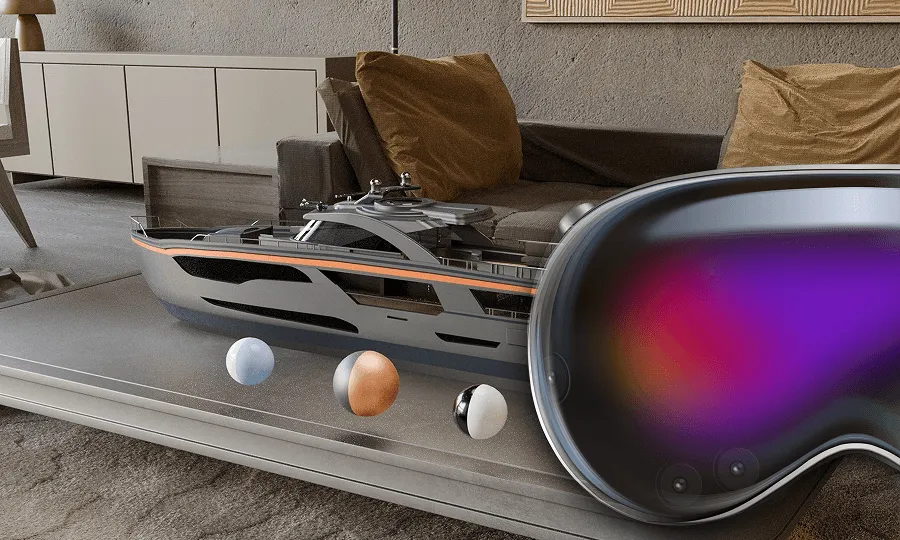
Built the AR platform and mobile apps behind immersive campaigns for Art Basel, Hï Ibiza, and other global brands
4 weeks
from idea to app launch
5K+
festival attendees engaged
2.5M
funds raised
 View details
Augmento came to us with an idea for an AR-enabled art marketplace, and as their vision expanded, they needed a partner who could scale quickly.
What started with two engineers grew into a 10-person team across front-end, back-end, and mobile, delivering immersive AR campaigns for brands like Art Basel, Diriyah Company, Hï Ibiza, and Delage Automobiles.
Supported by our technical partnership, Augmento secured $2.5M in funding and is now accelerating its roadmap, including a no-code AR campaign builder that lets brands create and launch experiences without writing a line of code.
Read client storyExplore our tech stack
Testimonials
More Than a Vendor
We work as an extension of your team, combining technical expertise, ownership, and clear communication to deliver real business results.
"The most impressive aspect of Softonix is their willingness to take on new challenges and work."

Daniel Locksley
VP Product & Technology
"Rather than coding for its own sake, their team is passionate and takes great pride in what they build."
Daniel Wiener
Co-Founder and CEO


"They care for your product as much as you do."
Andreas Zimmerer
Head of Engineering
"Their engineers are world class and communication from the team is fantastic. I couldn't have asked for a better team."

John Figueiredo
CEO
"These guys are incredibly easy to work with."

Chris McShane
CEO
"Pleasure to work with. They have great skills and are prompt. Absolutely planning to work with Softonix on future projects."

Jarrett Kuljis
Co-founder & Technical Director
"Exceptional team with very high quality and commitment. They are fast, efficient, and hardworking."

Sreejith Partha
CEO

"It's rare to find a team that combines strong technical execution with genuine commitment."
Jeff Chan
CEO
"The most impressive aspect of Softonix is their willingness to take on new challenges and work."
Daniel Locksley
VP Product & Technology
"Rather than coding for its own sake, their team is passionate and takes great pride in what they build."
Daniel Wiener
Co-Founder and CEO
"They care for your product as much as you do."
Andreas Zimmerer
Head of Engineering
"Their engineers are world class and communication from the team is fantastic. I couldn't have asked for a better team."
John Figueiredo
CEO
"These guys are incredibly easy to work with."
Chris McShane
CEO
"Pleasure to work with. They have great skills and are prompt. Absolutely planning to work with Softonix on future projects."
Jarrett Kuljis
Co-founder & Technical Director
"Exceptional team with very high quality and commitment. They are fast, efficient, and hardworking."
Sreejith Partha
CEO
"It's rare to find a team that combines strong technical execution with genuine commitment."
Jeff Chan
CEO
Let’s talk
If you are building something meaningful and need a team you can rely on, we are ready to step in. Tell us what you are working on or book a call when it suits you.
AI prototype to production FAQs
Mostly two things: how many outside services the app connects to (payments, email, CRMs), and whether the data model can stay or has to change. A simple internal tool with one database costs far less than a marketplace with payments and user roles. The review gives you a fixed price for your app, so you know the full cost before any build work starts.
Then we tell you so, with the reasons, before you spend anything on the build. In most cases only one or two parts need replacing, usually the data model or auth. When a full rebuild does make sense, your prototype becomes the spec: the screens, flows, and logic you already validated carry over, so the rebuild moves much faster than a project from zero.
Yes, for the first weeks. Many founders keep testing ideas in the builder while we take the vibe code to production. We agree on a cutoff point, after which new features go into the production codebase instead, so the two versions never drift apart or overwrite each other.
They should not. We prepare the production version on separate infrastructure, move the data, test it end to end, and switch over at a quiet hour. If anything looks wrong after the switch, we roll back in minutes.
No. Most founders who come to us built the prototype themselves without a technical background. We explain every decision in plain language and tell you which choices are yours to make (what to launch first, which features can wait) and which ones we handle.
Yes, and we set that up on purpose. We add tests, code review rules, and clear structure, so the next Claude Code or Cursor session builds on solid ground instead of breaking what works. Your team keeps the speed and loses the risk.
Yes. We can work alongside them, review their changes, or hand the codebase over to them after launch with docs and a walkthrough. Many clients keep one person in-house and use us for the heavy lift.
Start by moving every secret and API key off the frontend and turning on access rules for every database table. Then create a separate environment for testing, so you stop editing the live app. Those steps remove most of the risk of losing data. Beyond that, production needs tests, monitoring, and a release process, which is where most founders bring in a team.